
Battle of Cable Street 90th Anniversary: East End Prepares for Historic Commemorative March and Cultural Festival
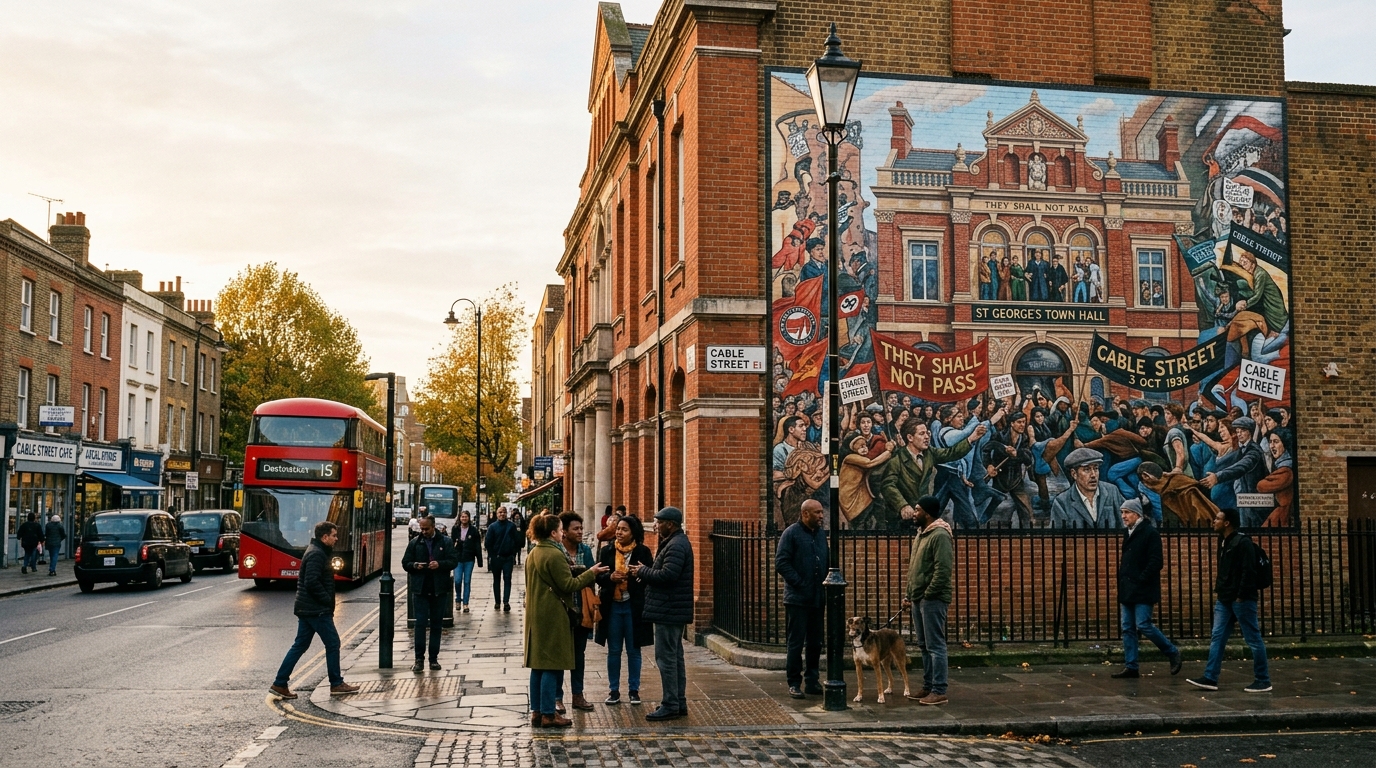
London's East End is gearing up for one of the most poignant and historic milestones in modern British working-class history. In October 2026, Tower Hamlets will mark the 90th anniversary of the Battle of Cable Street, an era-defining moment of community solidarity that saw hundreds of thousands of local residents unite to block a march by Oswald Mosley’s British Union of Fascists.
Local community groups, trade unions, historians, and Tower Hamlets Council have initiated preparations for an expansive cultural programme, culminating in a major commemorative march, street festival, and living history exhibitions across Shadwell, Wapping, and Whitechapel.
The Spirit of October 1936
On Sunday 4 October 1936, the streets of the East End echoed with the cry "¡No pasarán!"—"They shall not pass." Mosley had planned to march thousands of blackshirted fascists straight through the heart of Stepney's predominantly Jewish community, flanked by over 6,000 Metropolitan Police officers tasked with clearing the route.
What followed was an unprecedented demonstration of multi-ethnic and inter-faith defiance:
- United Solidarity: Jewish tailors, Irish Catholic dockers, railwaymen, trade unionists, communists, and local families erected barricades of overturned lorries, paving stones, and timber.
- Community Mobilisation: From tenement windows, residents threw marbles under the hooves of police horses and pelted attackers with rubbish and dirty water.
- The Decisive Victory: Overwhelmed by the sheer scale of the 100,000 to 300,000-strong counter-demonstration, the police commissioner ordered Mosley to turn back, routing the Blackshirts away towards Hyde Park in complete defeat.
Programme for the 90th Anniversary
The 2026 anniversary promises to be the largest commemoration in a generation, blending remembrance with contemporary celebrations of community resilience.
The Grand Commemorative March
Marchers will retrace the historic confrontation through the borough, assembling in Altab Ali Park (Whitechapel) before processing down through Commercial Road to the iconic Cable Street Mural at St George’s Town Hall. The march will feature traditional trade union banners, brass bands, and spoken-word performances from young East London artists.Cultural Festival & Street Celebrations
Following the procession, Cable Street and nearby King Edward Memorial Park will host a day-long family-friendly street festival, featuring:- Live Music & Poetry: Contemporary folk, klezmer, Bengali folk music, and protest choirs.
- Oral History Pavilions: Interactive listening booths sharing recordings of original 1936 eyewitnesses alongside accounts from contemporary East End community champions.
- Guided Heritage Walks: Expert-led walking tours covering key East End resistance landmarks, from Gardiner's Corner to Dock Street.
- Workshops & Stalls: Local heritage crafts, zine-making, radical history bookstalls, and food vendors celebrating the diverse culinary fabric of Tower Hamlets.
The Cable Street Mural Restoration
A focal point of the anniversary preparations is the continued conservation of the world-famous Cable Street Mural painted across the west wall of St George's Town Hall. Commissioned in the late 1970s and completed in 1983 by Dave Binnington, Paul Butler, Ray Walker, and Desmond Rochfort, the vibrant fresco vividly captures the clashes, the flying missiles, and the collective spirit of the day. Specialist conservators are working to ensure the mural remains pristine for future generations.
Getting Involved
Organisers are actively calling for local volunteers, schools, musicians, and artists across Greater London to participate in the commemorations. Whether through submitting family archives, joining community choirs, or helping to steward the historic march, everyone is invited to honour a legacy of unity that remains as vital today as it was in 1936.
For ongoing updates, programme details, and volunteer registration, keep an eye on Tower Hamlets local cultural announcements as the 2026 anniversary approaches.